
Why most execution systems stall
Teams usually do not fail because they lack ideas. They fail because the work is spread across too many tools, too many approvals, and too much context switching.
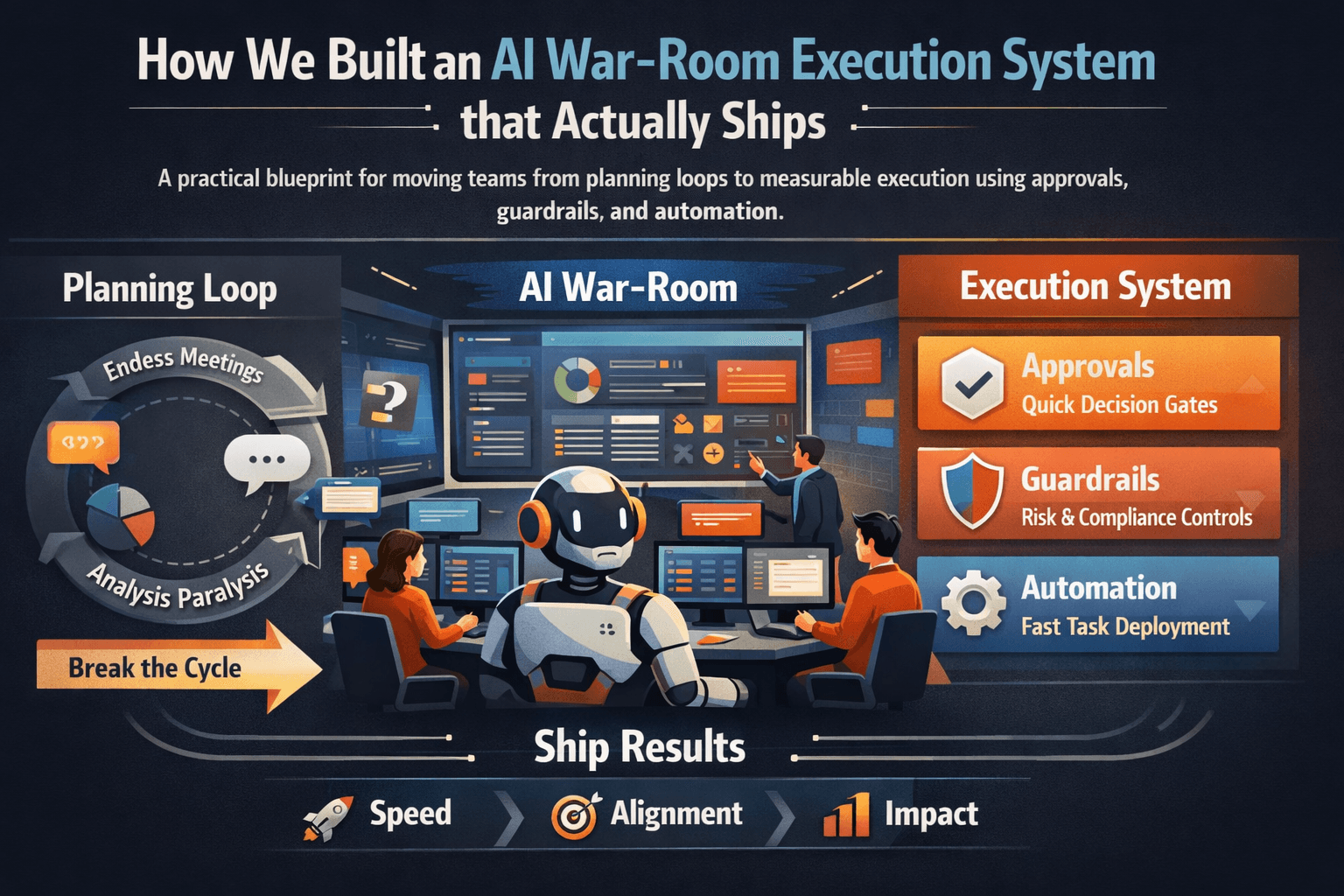
The war-room system we shipped was designed to reduce that friction. It pulled requests, status, approvals, and follow-ups into one execution loop so work could move without losing control.
What made it work
The core pattern was simple: classify, route, and approve. Every request entered the system with a clear owner, a required action, and a safe automation boundary.
- AI handled classification and draft responses.
- Sensitive actions required a human approval gate.
- Every action produced an auditable trail for later review.
- Escalations were time-based, not memory-based, so nothing disappeared in a chat thread.
The implementation lesson
The biggest win was not the model choice. It was the workflow design. Once the system matched how the team actually worked, adoption followed naturally.
That is the pattern we try to repeat in production systems: automation should remove drag, not create a second job for the people using it.
Key takeaways
- Start with workflow clarity before adding automation.
- Design approvals as part of the path, not as an afterthought.
- Track every action so the system stays trustworthy.